


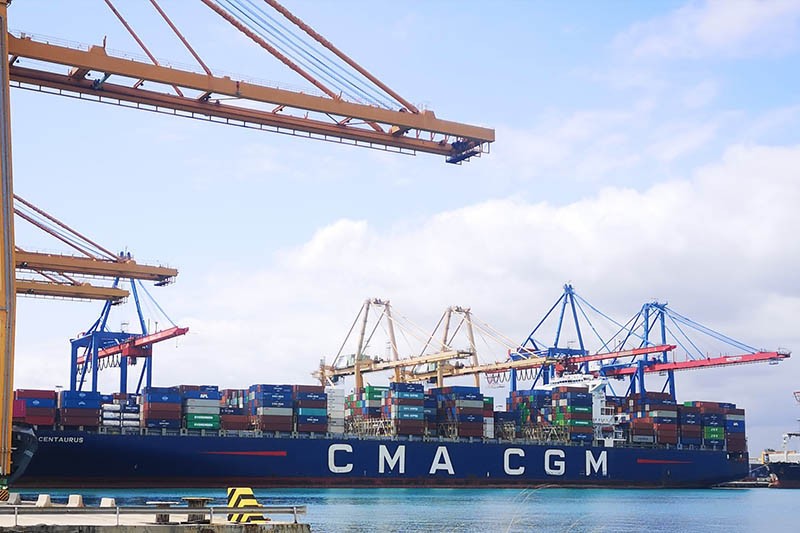
As proposed by the European Biogas Association (EBA), biomethane is emerging as a transport fuel that provides a sustainable and readily available alternative to conventional fuels.
As recently published, bio-GN L can reduce greenhouse gas (GHG) emissions in the transport sector between 95% and 174%. This scenario is especially encouraging for the maritime sector , as it meets the GHG emission reduction target of 75% by 2050 set out in EU legislation.
As published by the Spanish Association of Automotive Professionals, AEPA , the European Environmental Agency points out that transport is responsible for 27% of total GHG emissions in Europe and is one of the main contributors to climate change . The European Commission recently set a goal of increasing the share of renewable energy in transport to at least 14% by 2030, including a minimum share of 3.5% of advanced biofuels.
One of the options for the rapid decarbonization of the transport sector would be the use of bio-LNG, produced from organic waste . This renewable fuel is readily available for use at scale and with infrastructure already in place. According to the article “Sustainable mobility in Europe: Potential market share for bio-LNG in the heavy transport and maritime sectors in 2050”, written by Floris Goedhart , it is also illustrated that the share of bio-LNG in heavy vehicles and transport maritime in 2050 are equally promising.
Their research shows that by 2050 bio- NGL production could amount to 46–405 TWh, representing between 1.7% (lower scenario) and 18.7% (higher scenario) of energy consumption. of European transport. The bio-LNG market share could be at least 57% in the heavy vehicle sector or 17% in the maritime sector.
“For the decarbonisation of transport to accelerate, all sustainable renewable fuels are necessary. Bio-LNG is the most available solution to decarbonise transport in Europe, especially in the maritime and heavy transport sectors. Unlike other renewable alternatives, you can benefit from the existing LNG infrastructure”, explains Floris Goedhart.
The transition to decarbonization has already begun. Europe has been experimenting with the development of bio-LNG plants in recent years. According to the EBA Statistical Report 2022 , there were 15 bio-LNG producing plants active in Europe at the end of 2021. This number is expected to rise considerably with 100 new bio-LNG projects confirmed by 2025, representing a capacity total production of 12.4 TWh per year.
“In Europe, sectors that are difficult to decarbonise, such as the heavy vehicle and maritime sectors, release a substantial amount of the total GHG emissions from European transport. These emissions must be reduced rapidly and bio-LNG has the potential to do so. It is hoped that the results of this study can contribute to ensuring the long-term implementation of bio-LNG in the European transport sector”, concludes Goedhart.
